The Symptoms That Actually Point to Root Circling
If a plant grew well for the first few months and then quietly stopped – slower leaves, less new growth, fading colour even though you haven’t changed your routine – the pot is a more likely culprit than the fertiliser bottle. Root circling develops silently below the soil line, well before it shows up above it.
Most home gardeners misread these signs as watering or feeding problems, because that’s where the advice online points first. Add more fertiliser, the yellowing continues. Water more carefully, the plant still wilts by afternoon. The pattern that actually gives it away is timing: symptoms that appear months after a plant was thriving, not from day one, usually mean the roots have run out of usable space and started coiling against the container wall.
A plant that needs repotting every two to three months just to keep growing isn’t unusually vigorous – it’s cycling through the same root-bound problem in a bigger container each time.
What’s Happening Underground Inside a Solid-Walled Pot
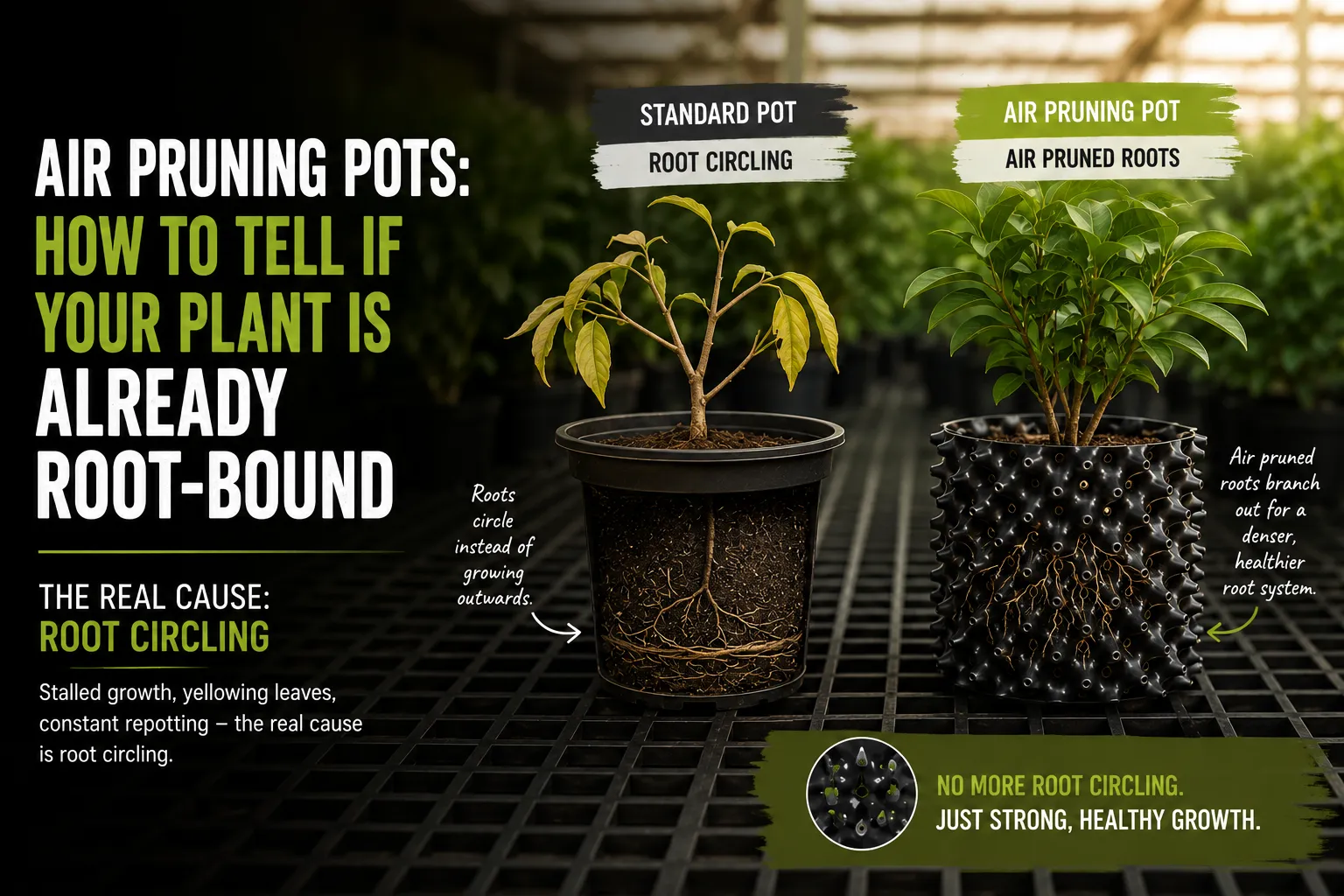
In a standard plastic or ceramic pot, a growing root tip eventually reaches the wall and has nowhere to go. It bends and keeps growing along the inside surface, and after enough cycles the pot fills with a dense ring of circling roots instead of the branching network the plant actually needs to feed itself.
This matters more than it looks like it should. A circling root system has far less surface area in contact with fresh soil than a branching one – most of the root mass is pressed against itself or the pot wall, not spread through the growing medium where water and nutrients actually are. That’s the mechanical reason feeding and watering stop producing results: the roots that would absorb the extra nutrients simply aren’t positioned to reach them.
The full mechanics of why root tips prune themselves on contact with air – and how that response is engineered into RightPot’s aeration cone design – are covered in detail in our air pruning technology guide, worth reading if you want the underlying science before you switch containers.
The Two-Minute Check Before You Decide to Repot
Tip the pot on its side and look at the drainage holes at the base. Visible roots circling around the opening, or a thick mat pressed against the bottom, confirm root circling without needing to fully unpot the plant. Water that runs straight through and out within seconds is a second sign – it means roots have displaced most of the soil that would normally hold moisture.
If you do slide the root ball out, look at the outer edge specifically. A few visible roots at the surface is normal. A continuous ring circling the entire perimeter, especially if it’s started to thicken and turn brown or woody, means the plant has been root-bound for a while and the next repot is the moment to change the type of container, not just the size.
| What You’re Seeing | Common Misdiagnosis | What’s Actually Happening |
|---|---|---|
| Growth stalls after a strong start | Not enough fertiliser | Roots have filled the pot and started circling instead of branching |
| Leaves yellow despite regular feeding | Nutrient deficiency | Circling roots have too little surface area to absorb what you’re feeding |
| Water drains through almost instantly | Normal fast-draining soil | Root mass has displaced the soil that would hold water |
| Needs repotting every 2–3 months to keep growing | A naturally vigorous plant | The same root-bound cycle repeating in a bigger pot each time |
| Roots visible circling the drainage hole | – | Confirmed root circling – repot now |
How Air Pruning Pots Interrupt the Spiral
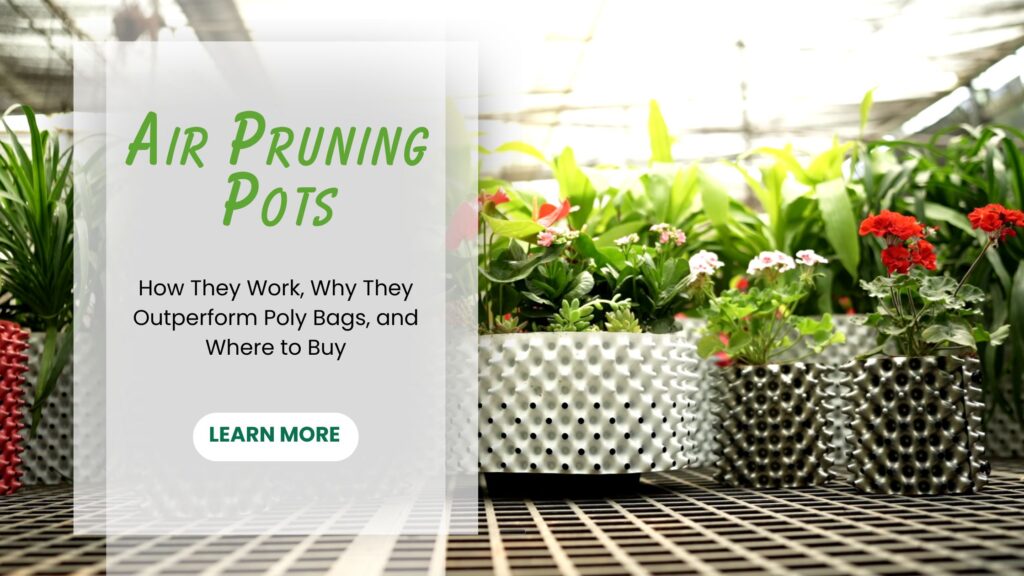
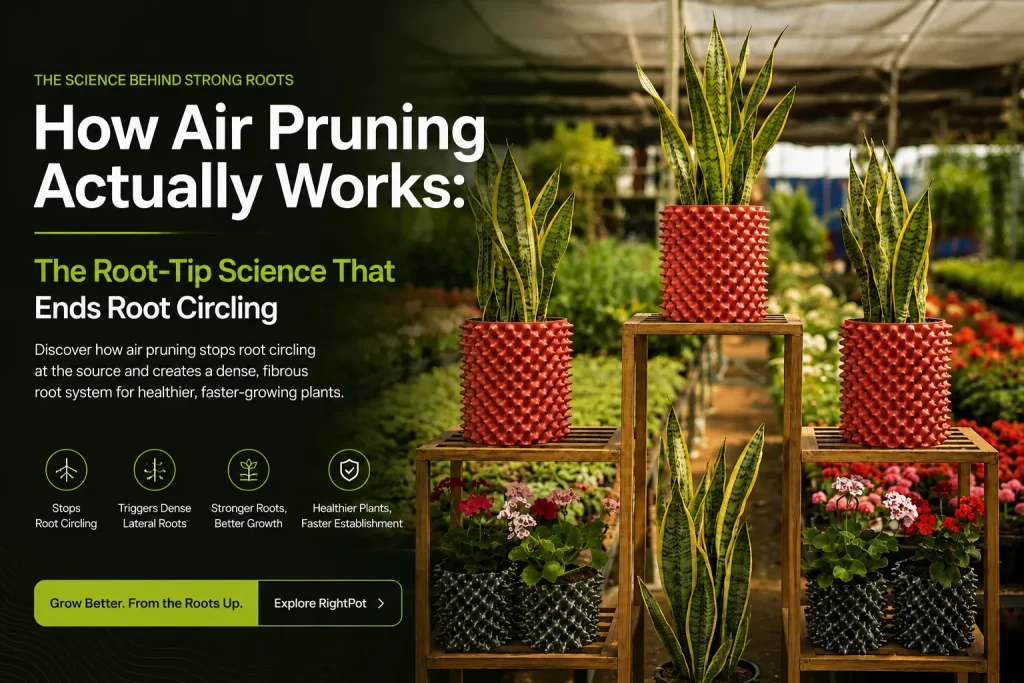
Air pruning pots replace the solid wall with strategically placed aeration cones. When a root tip grows through one and reaches open air, it dries out at the tip – a natural process that stops that root from extending further and signals the plant to send out new lateral roots instead. Repeated across every cone in the container, this produces a dense, fibrous root mass rather than a spiral.
For a plant that’s already showing root-bound symptoms, moving it into an air pruning pot at the next repot addresses the actual cause rather than just buying it more room to keep circling in. The container size matters, but the aeration cone structure is what changes the outcome – a bigger solid-walled pot delays the problem; an air pruning pot removes it.
Choosing the Right Air Pruning Pot Size When You Switch
Match the new pot to the plant’s current root spread rather than jumping several sizes up at once. RightPot’s RP series runs from the 3-litre RP-01 through the 36-litre RP-10, with the RPP series extending up to 50 litres for larger specimens – sixteen sizes in total, so there’s usually a close match to whatever container the plant is currently root-bound in.
- Coming out of a small nursery or starter pot: RP-01 (3L) or RP-02 (6L) for herbs, seedlings, and compact vegetables.
- Coming out of a standard 8–10 inch pot: RP-03 (10L) or RP-05 (12L), depending on whether the plant has a spreading or a deeper root habit.
- Coming out of a large tub or grow bag: RP-06 (20L) through RP-09 (26L) for dwarf fruit trees, established ornamentals, and long-term terrace plantings.
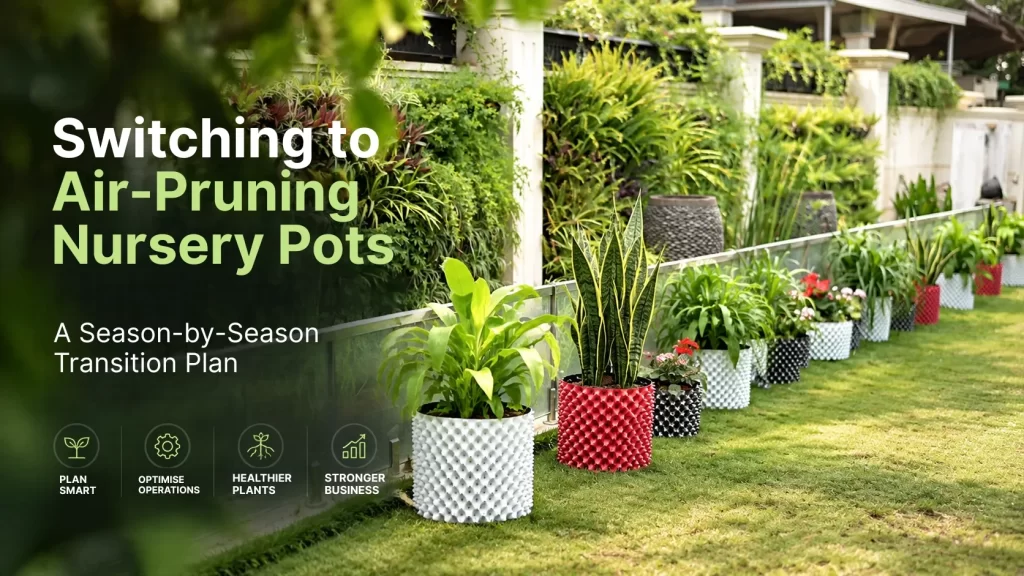
- All sizes are available in Carbon Black, Harvest Red, Pearl White, or Chrome Silver – colour doesn’t affect the air pruning performance, so pick whatever suits the space.
FAQs: Air Pruning Pots and Root-Bound Plants
1. How do I know if my plant is root-bound without taking it out of the pot?
Check the drainage holes at the base for visible circling roots, and time how fast water drains through – if it runs out almost immediately, roots have likely displaced most of the soil. Stalled growth months after a strong start is the third sign worth watching for.
2. Can a root-bound plant recover without repotting?
No. Circling roots don’t uncoil on their own – the physical spiral stays until it’s addressed at repotting. Feeding or watering more won’t fix a structural root problem, since the roots causing the issue aren’t positioned to absorb the extra input.
3. Will moving a root-bound plant into an air pruning pot shock it?
Minimal shock if done carefully: water the plant an hour or two beforehand, gently loosen (don’t tear) the outer circling roots before placing it in the new pot, and water immediately after. Most plants resume visible growth within the following weeks.
4. Do air pruning pots work indoors, or only outdoors?
The aeration cone mechanism works indoors too, since it depends on the root tip reaching air, not on outdoor weather. Indoor airflow is generally lower than outdoors, which affects drying speed more than the air pruning response itself – a separate consideration from root circling.
5. What size air pruning pot should I choose if my current pot is small?
Move up to the next capacity in the RP series rather than several sizes at once – for example, from a 6-litre starter pot to the 10-litre RP-03. Jumping too large leaves excess wet soil around a small root ball, which creates its own problems.
6. How often will I need to repot again after switching to an air pruning pot?
Meaningfully less often, since a fibrous root system doesn’t hit the same circling wall that forces frequent repotting in solid-walled containers. Exact timing still depends on the species and growth rate 【CONFIRM typical interval before publishing, if a specific figure is wanted】.
Repot Once, Not Every Season
Root circling is a container problem, not a care problem – no amount of extra feeding or watering fixes a root system that’s spiralling against a solid wall. Switching to an air pruning pot at the next repot addresses the cause directly, using the same aeration cone mechanism nurseries across India already rely on for commercial-scale growing.
Not sure which size fits your plant? Find My Pot Size →
Request a trial order or sizing consultation:
Contact RightPot at info@rightpot.in or WhatsApp (+91) 9996665430.
No minimum order.
Our team will recommend the right aeration container size for your specific crop and cultivation timeline.