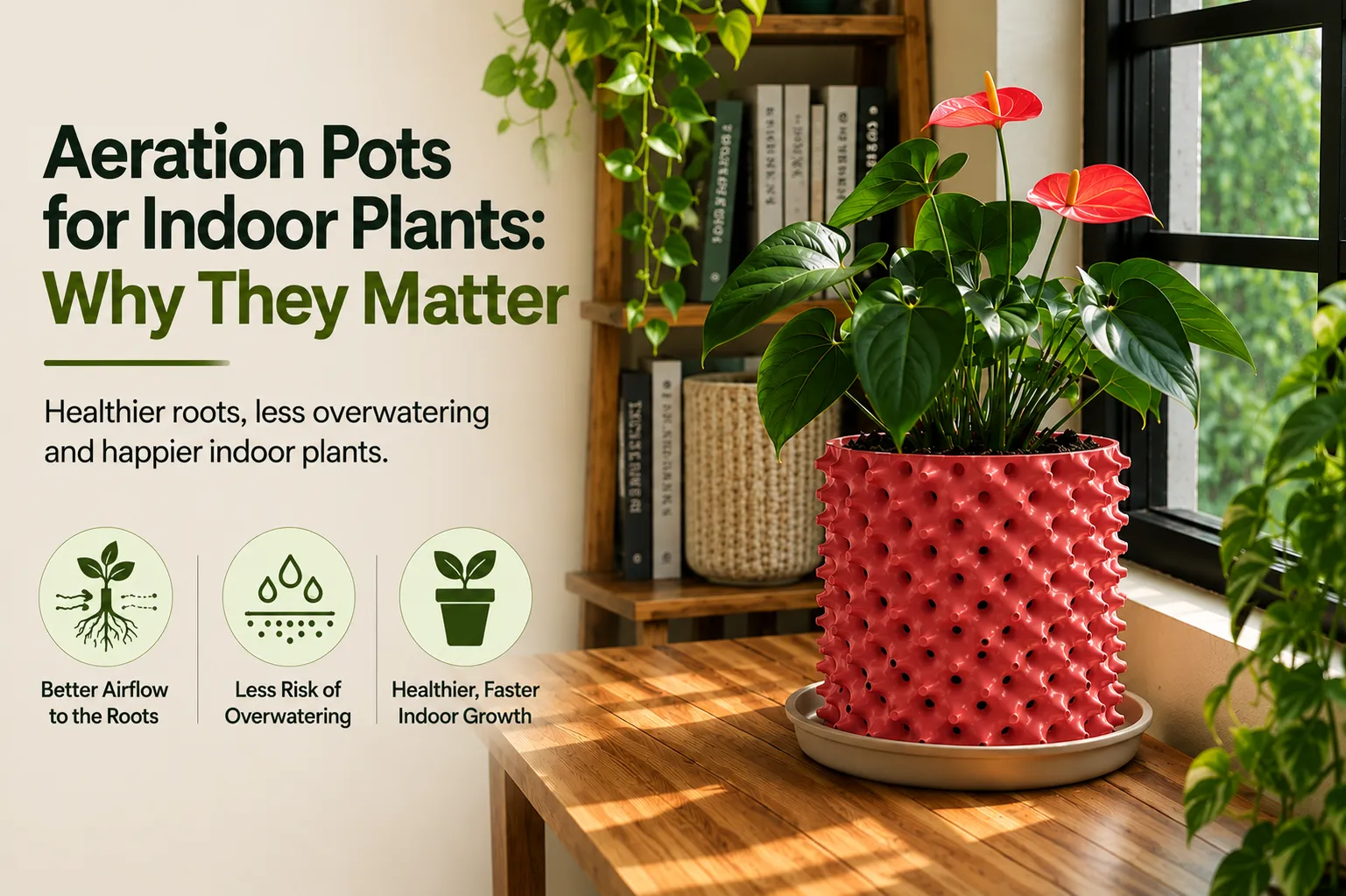
Outdoor pots get help from wind, sun, and monsoon runoff to move air and excess water through the soil. Indoor pots get none of that – which is why indoor plants are overwatered far more often than outdoor ones. Aeration pots solve this with holes positioned around the container wall instead of just the base, giving stagnant indoor air a way to reach the root zone.
Why Indoor Plants Are More Vulnerable to Waterlogging
Outdoors, even a poorly drained pot gets some help: breeze moves across the soil surface, temperature swings between day and night speed up evaporation, and a rainy spell is followed by drier air that lets excess moisture escape. None of that happens on a windowsill or in a closed balcony corner.
Indoors, water that doesn’t drain fast enough just sits. The soil surface stays damp longer, airflow across it is minimal, and the same watering schedule that worked fine outdoors can leave indoor roots sitting in moisture for days. This is the specific reason indoor plants get root rot at a rate outdoor plants in identical soil rarely do – the container isn’t getting any environmental help to dry out.
A pot with drainage holes only at the base still traps this problem, because the base holes handle water leaving the pot, not air reaching the root zone above it. That’s a different function, and it’s the one indoor growing conditions need most.
What Aeration Pots Actually Change Indoors
Aeration pots place holes around the container wall, not just the base, so air can reach roots at multiple points instead of only at the very bottom. Indoors, where there’s no wind to compensate, this wall-level airflow is doing work that outdoor conditions would otherwise provide for free.
The practical result is a root zone that dries evenly instead of staying damp at the core while the surface looks fine. For growers who’ve had a plant look healthy on top while the roots quietly rotted underneath, this is the gap aeration pots are built to close.
This sits alongside – not instead of – the air pruning mechanism used across RightPot’s full range, where root tips are pruned at the cones to trigger lateral branching. Indoors, both effects matter: the fibrous root system air pruning produces is also the root structure best placed to benefit from even airflow.
Setting Up an Aeration Pot on a Windowsill or Balcony
Place the pot somewhere with at least some air movement – near a window that opens, a ceiling fan on low, or an open balcony rather than a sealed corner. Aeration pots reduce the need for strong airflow, but they still perform better with some circulation than none.
Use a saucer or tray that sits below the pot’s raised base rather than flush against it, so air can still move under the container and not just around its sides. A tray filled with pebbles under the pot is a simple way to keep the base elevated without extra hardware.
- Windowsill herbs and compact vegetables: RP-01 (3L) or RP-02 (6L), light enough to move between light and shade.
- Balcony ornamentals and larger houseplants: RP-03 (10L) or RP-05 (12L) depending on whether the plant spreads or grows upright.
- Low-light indoor corners: keep soil volume modest rather than oversized – a smaller aeration pot dries more evenly than a large one in low airflow, low light conditions.
Adjusting Your Watering Rhythm Indoors
Water indoor plants in aeration pots slightly less frequently than the same species would need outdoors, and check the top two to three centimetres of soil before each watering rather than following a fixed schedule. Because indoor air is stiller, soil in any container – including an aeration pot – takes longer to dry than it would outside.
The improvement aeration pots offer isn’t unlimited: they reduce the odds of a soggy, oxygen-starved root zone, but they don’t replace checking the soil. Pair the container with attentive watering rather than treating it as a substitute for it.
| Condition | Outdoors | Indoors (why aeration pots matter more) |
|---|---|---|
| Air movement across the pot | Wind, open exposure | Minimal to none – walls and furniture block airflow |
| Evaporation from soil surface | Faster, aided by sun and temperature swings | Slower – stable indoor temperatures don’t help drying |
| Excess water after watering | Often absorbed into surrounding ground or evaporates faster | Sits in the tray or soil with nowhere to go |
| Risk if drainage is base-only | Partially offset by outdoor airflow | Root zone stays damp longer – higher root rot risk |
Which Indoor Spaces Benefit Most
Enclosed balconies, north-facing windowsills, and air-conditioned rooms benefit the most from aeration pots, because these are exactly the spaces with the least natural airflow. A plant on an open, breezy balcony has less to gain than one tucked into a still corner of a living room.
If you’re deciding which of your indoor plants to move into aeration pots first, start with whichever ones have shown soggy or slow-draining soil in their current containers – that’s the clearest sign the space isn’t giving the roots enough air on its own.
FAQs: Aeration Pots for Indoor Plants
1. Why do my indoor plants stay wet longer than outdoor ones in the same soil?
Indoor spaces lack the wind and temperature swings that help outdoor soil dry out. Without that natural airflow, water sits at the root zone longer, which is why indoor plants are more prone to overwatering and root rot in identical potting mix.
2. Do aeration pots work without any airflow in the room at all?
They perform better with some air movement, but the wall-level holes still let air reach the root zone even in relatively still rooms – more than a solid-walled pot would in the same spot. A cracked window or occasional fan use helps further.
3. Can I use aeration pots for low-light indoor corners?
Yes, though it helps to keep the pot size modest rather than oversized for the plant – a smaller aeration pot dries more evenly in low light and low airflow than a large one with excess unused soil volume.
4. Do aeration pots need a different watering schedule indoors?
Check the top two to three centimetres of soil before watering rather than following a fixed schedule. Indoor air is stiller than outdoor air, so soil in any container – aeration pots included – takes longer to dry than it would outside.
5. What’s the difference between aeration pots and just adding more drainage holes to a regular indoor pot?
Extra holes at the base still only manage water leaving the pot. Aeration pots place holes around the container wall as well, which lets air reach the root zone at multiple points – a different function from base drainage alone.
6. Which of my indoor plants should move to an aeration pot first?
Start with whichever plants have shown slow-draining or consistently damp soil in their current pots. That’s the clearest indicator the space isn’t providing enough natural airflow, which is exactly the gap aeration pots are built to close.
Give Indoor Roots the Air Outdoor Plants Get for Free
Indoor growing removes the wind and temperature swings that quietly help outdoor pots stay healthy. Aeration pots close that gap by moving the airflow function to the container itself, rather than relying on a room to provide it.
Setting up your first indoor container? See the step-by-step repotting walkthrough for exactly how to pot up correctly the first time.
Request a trial order or sizing consultation:
Contact RightPot at info@rightpot.in or WhatsApp (+91) 9996665430.
No minimum order.
Our team will recommend the right aeration container size for your specific crop and cultivation timeline.